
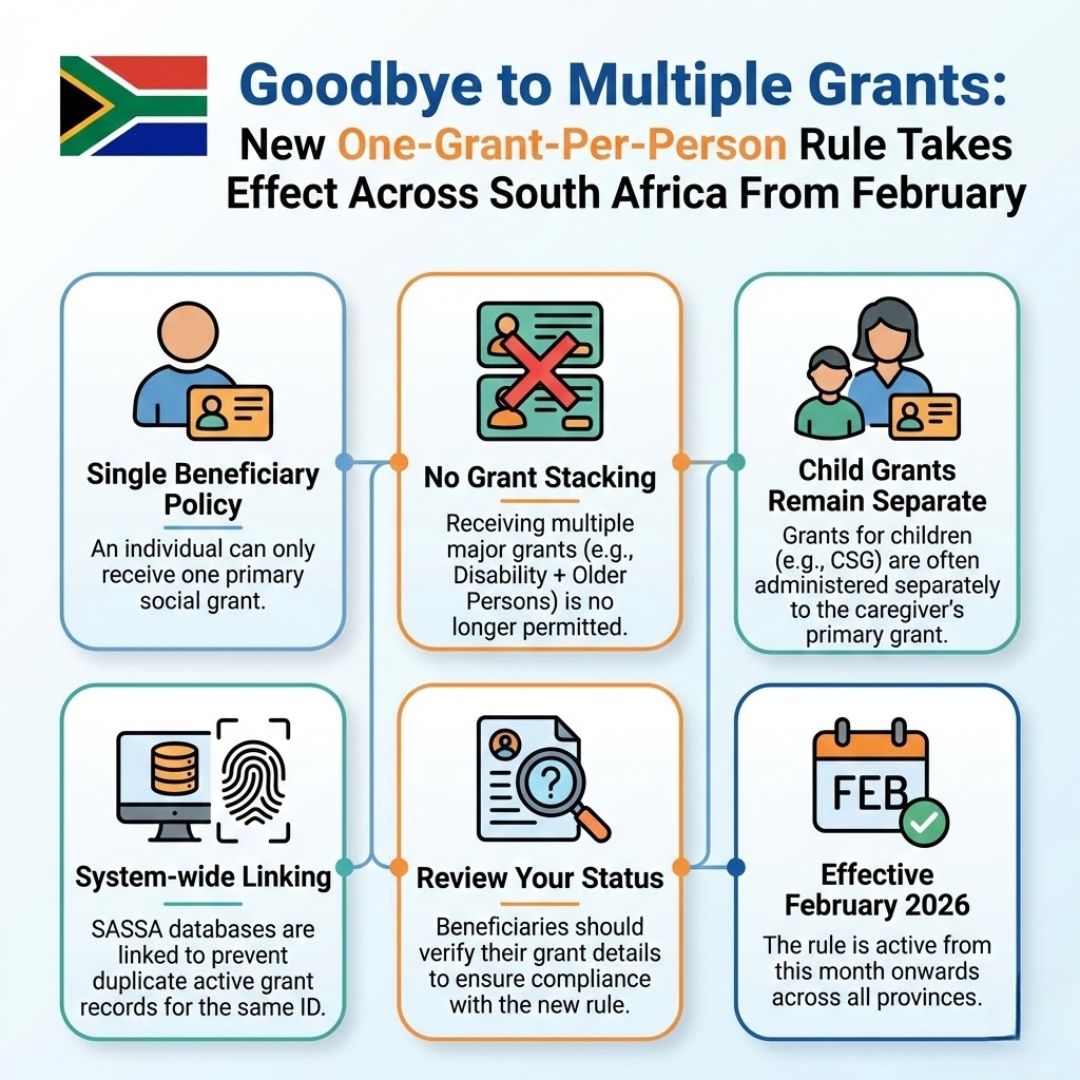
The implementation of the one-grant-per-person policy in February 2026 marks a major shift in how government financial assistance is distributed. Under this new rule, individuals will no longer be able to receive multiple grants at the same time, even if they qualify for more than one program. The policy is designed to streamline the welfare system, improve fairness, and ensure that limited resources reach those who need them most. This article explains how the policy works, who it affects, and what it means for citizens moving forward.

Understanding the One-Grant-Per-Person Policy
The one-grant-per-person policy applies to all citizens receiving government financial support. From February 2026, each individual will be eligible for only one grant, regardless of previous entitlements. The government introduced this change to promote fair distribution, reduce duplicate benefits, and improve fund accountability. Officials believe the policy will prevent misuse of public funds and ensure assistance is directed toward individuals with the greatest need. Those who previously received multiple grants will need to review their eligibility and determine which single grant best suits their circumstances.
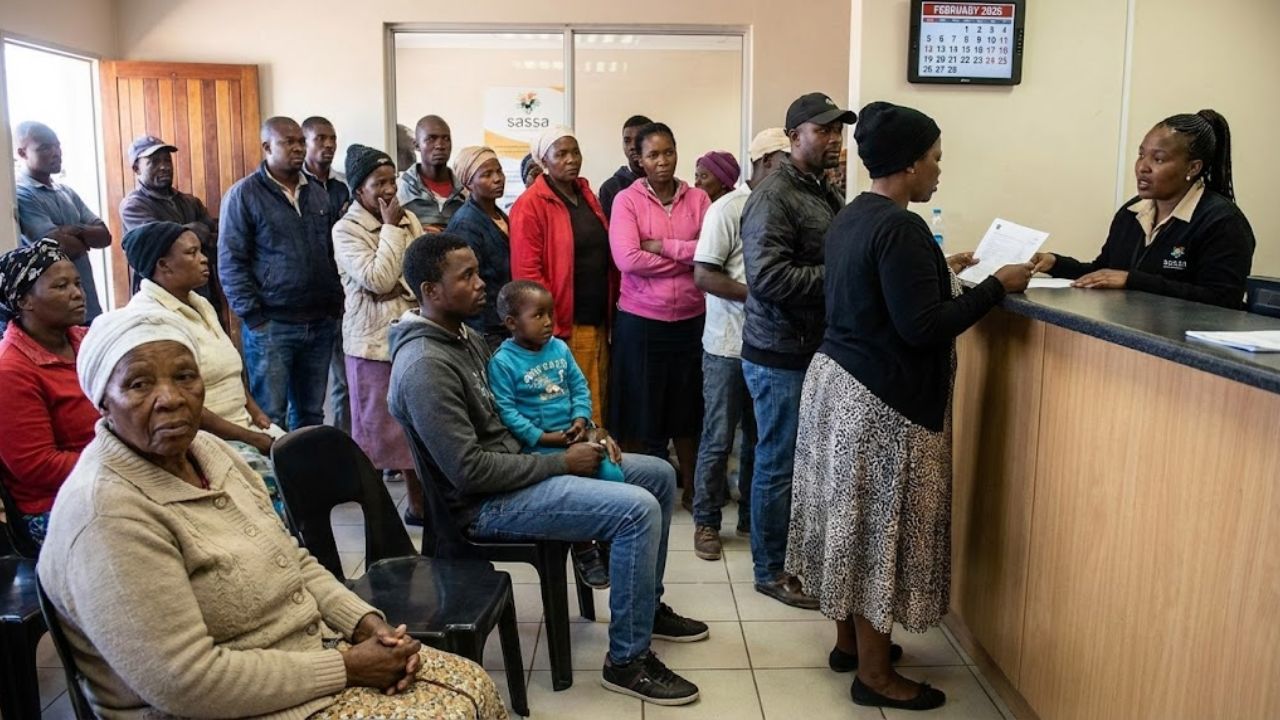
 R8,070 Income Rule February 2026: What Changes for SASSA Eligibility and Why Beneficiaries Must Act
Impact on Low-Income Households
Low-income households are expected to feel the impact of this policy most strongly, as many relied on multiple grants to manage essential expenses. Limiting support to one grant may create financial pressure for families already struggling to cover basic costs. However, the government states that the remaining grant will focus on essential living needs such as food support, healthcare access, or housing stability. Despite these assurances, advocacy groups warn that some families may face increased hardship during the transition period.
 Goodbye to Pension Payment Delays: SASSA Begins Clearing Backlogs Starting 15 February 2026
How the Policy Changes Grant Management
From an administrative perspective, the one-grant-per-person rule simplifies grant management significantly. By reducing the number of grants issued per individual, the government expects lower administrative costs, faster processing times, and fewer system errors. This streamlined approach allows authorities to allocate funds more efficiently and focus resources on high-priority programs. However, during the initial rollout, some recipients may experience temporary confusion or delays as the new eligibility system is implemented.
Summary of the Policy’s Overall Impact
The one-grant-per-person policy represents a substantial change for citizens who previously depended on multiple forms of government assistance. While the policy aims to improve resource efficiency and ensure equal access to financial aid, it also introduces challenges for vulnerable households. The long-term success of the policy will depend on how effectively the government manages the transition and whether a single grant can adequately support citizens’ basic needs.
Grant Types and Payment Schedule
| Grant Type | Eligibility Criteria | Payment Dates |
|---|---|---|
| Basic Income Grant | Low-income individuals | 15th of each month |
| Healthcare Assistance | Low-income families | 1st of each month |
| Housing Support Grant | Citizens with housing needs | 30th of each month |
| Food Security Grant | Families with children | 10th of each month |