
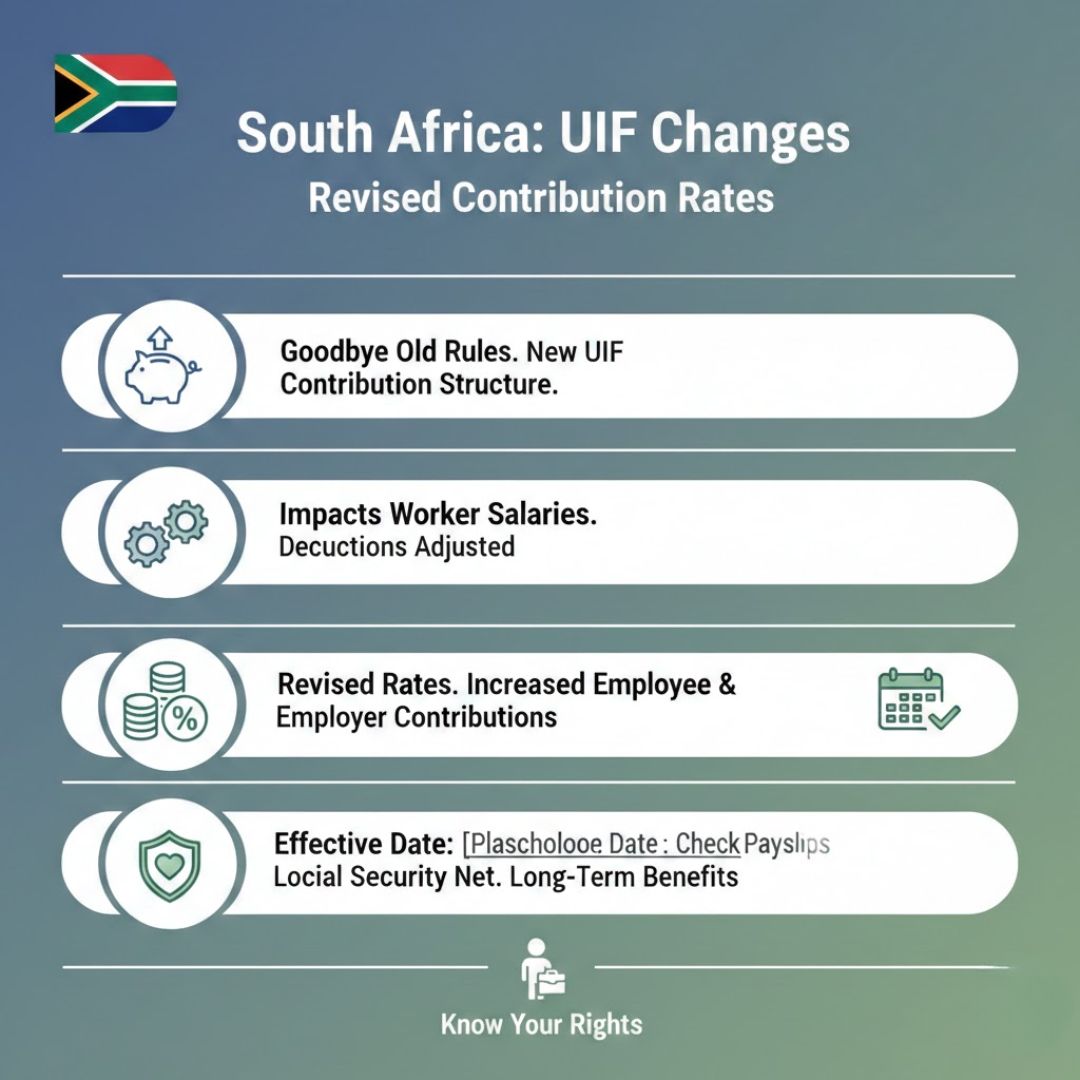
South Africa has recently announced significant changes to the Unemployment Insurance Fund (UIF) contribution rates, marking a shift from the old regulations. These revisions are set to affect worker salaries across the country as the new rates will be applied to both employees and employers. Understanding how these changes will impact take-home pay and business finances is essential for everyone involved. With these modifications, workers and businesses alike must prepare for the new requirements starting in 2026.

New UIF Contribution Rates and Worker Salaries
The revised UIF contribution rates will significantly impact worker salaries across South Africa. As of 2026, the new rates will be set at a higher percentage, which means workers will see an increase in deductions from their monthly earnings. While the contribution will provide greater security for employees in times of unemployment, it will also affect take-home pay. Workers should be aware of how these increased deductions could impact their budgets. Understanding the changes will help workers better manage their finances as they adjust to the new system.

Impact on Employers and Business Finances
Employers are also facing a challenge with the updated UIF contribution rates. Businesses will be required to match the increased deductions for their employees, which could impact company budgets and operational costs. In addition, the new contribution system may lead to a reevaluation of payroll management and financial planning for businesses. Employers must prepare for the financial impact, including recalculating the cost per employee and ensuring compliance with the new regulations to avoid penalties.

Why These UIF Changes Are Necessary
The changes to the UIF contribution rates are designed to improve unemployment coverage and provide better support for those in need. As the cost of living continues to rise, the government has recognized the need to strengthen the social safety net and ensure that the UIF fund remains sustainable. The updated rates will provide workers with better financial protection during periods of unemployment and encourage a more resilient workforce in South Africa. These revisions are part of broader efforts to reform social security systems across the country.
Summary or Analysis
The revised UIF contribution rates will bring both challenges and benefits to workers and employers in South Africa. While employees will see a higher deduction from their wages, they will also receive more comprehensive unemployment coverage. Employers will need to adjust their financial planning to accommodate the new rates, which will affect business costs and payroll management. These changes are necessary to improve the sustainability of the UIF system and ensure better social security for workers, particularly as the cost of living continues to rise.
| UIF Contribution Rates | Employee Deduction (%) | Employer Contribution (%) | Total Contribution (%) |
|---|---|---|---|
| Current Rates | 1.0% | 1.0% | 2.0% |
| Revised Rates (2026) | 1.5% | 1.5% | 3.0% |
| Estimated Impact on Salary | Increase of 0.5% | Increase of 0.5% | |
| Government Goals | Strengthen unemployment safety net | Ensure sustainability | Provide better coverage |
Frequently Asked Questions (FAQs)
1. What is the eligibility for UIF contributions?
All employees earning a salary are eligible for UIF contributions, both from the employer and employee sides.

2. How will the UIF rate changes affect my take-home pay?
The new contribution rates will result in a higher deduction from your salary, reducing your monthly take-home pay.
3. What should employers do to comply with the new rates?
Employers must adjust their payroll systems to reflect the increased UIF contribution rates and ensure accurate deductions.
4. When do the new UIF contribution rates take effect?
The revised UIF contribution rates will be implemented starting in January 2026.