
People who work in South Africa are paying close attention to the big changes that are coming to the country’s unemployment insurance system. Starting in 2026, new rules for UIF contributions will mean that more money will be taken out of pay cheques. This will directly affect how much money people take home each month. The government says that the changes will make the fund more stable in the long run, but a lot of workers are worried about how these higher payroll deductions will affect their already tight budgets. It’s more important than ever to know what’s changing, why it matters, and how it could affect your pay stub.

How to Understand the New UIF Contribution Changes in 2026
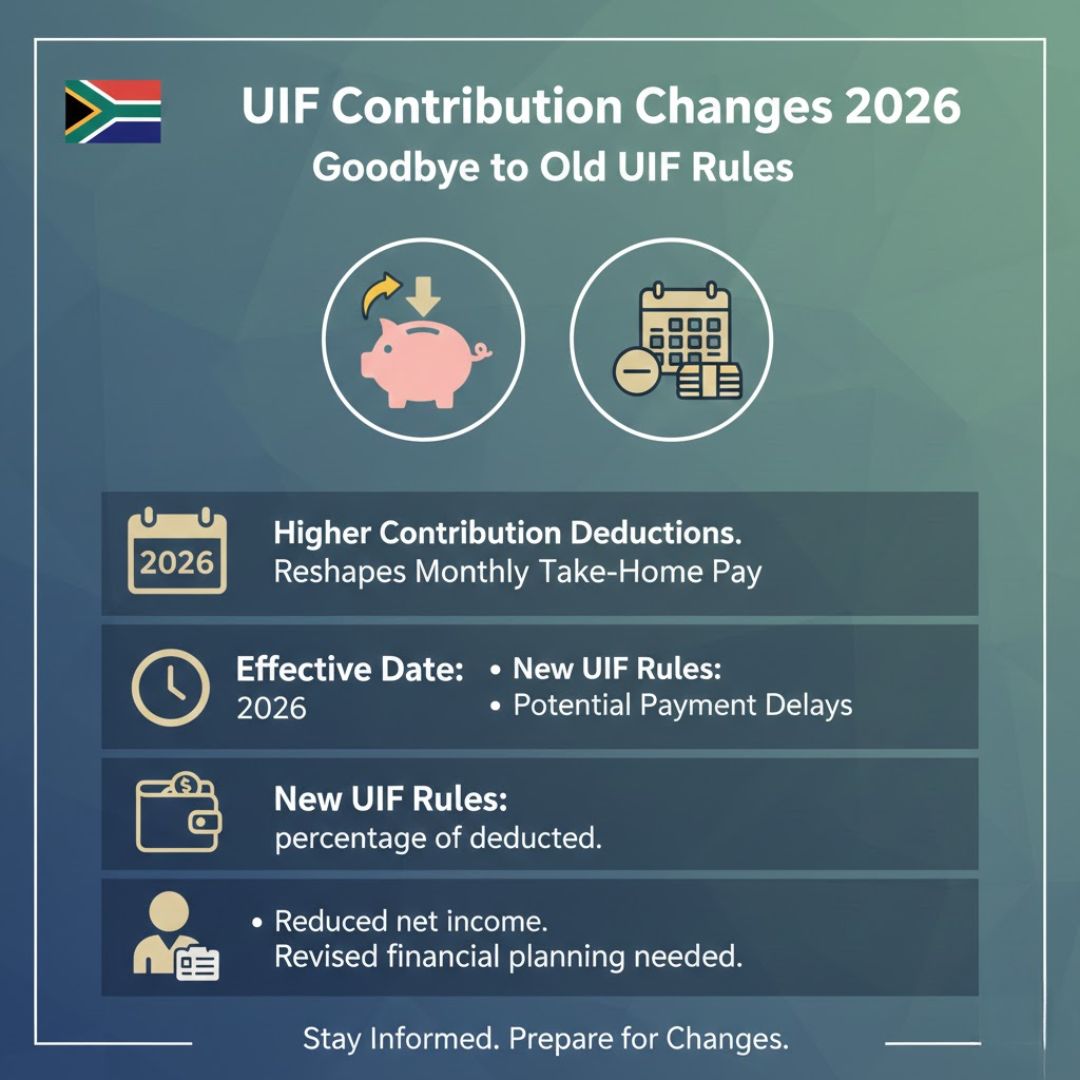
The changes to the UIF that are coming will clearly be different from how it has been set up for a long time. The new framework will probably raise the limits on contributions, which means that both employees and employers may have to pay more into the fund each month. The goal is to make the insurance fund more stable so that it can handle economic shocks and more people losing their jobs. But for workers, this means that their pay cheques will have more “increased payroll deductions.” The percentage changes may not seem like much at first, but over time they can have a big effect on how much money you take home each month, especially if you already pay a lot of taxes.

How Higher UIF Deductions Will Change Workers’ Pay
Many South African workers will probably notice small but important changes in how their net salary is calculated starting in 2026. As contribution limits are looked at, people who make more than certain amounts may be able to give more each month. The goal of this change is to make sure that people have better income protection coverage when they are sick, on maternity leave, or out of work. But the truth is that higher UIF payments lower “disposable household income,” which means that families have to spend less money each month. People need to pay more attention to how they spend and save money because even small changes in deductions can change how they plan their finances. This is especially true for people who have to pay for their own food, transportation, and rent.
Why South Africa Is Changing the UIF System Right Now
The decision to change the rules is based on bigger economic problems and the need for “long-term stability” in the unemployment insurance system. Officials say that the new system will make it easier to pay out benefits and stop funding shortfalls during emergencies. Recent years have shown that systems for processing claims have problems and that it is important to have a lot of money. Policymakers want to make the “national safety net” stronger for millions of workers by asking them to pay more. This could mean that salaries will be lower for a while, but the goal is to make the system more dependable so that it can help people when they really need it.
What These Changes to the UIF Mean for the Future
The 2026 UIF overhaul will mean more than just a technical change in the future. South Africa will also have to change how it balances the needs of workers with the needs of social protection. Employees will have to get used to “adjusted payslip totals” and find new ways to budget as their deductions change. At the same time, a stronger fund could give people better unemployment benefits and help them faster when things get tough. The real test will be how well the system handles claims and how honest it is about what it does. If done right, the changes could make the insurance system more fair and reliable, which would be good for both workers and the economy as a whole.