
Starting in 2026, the South African government is considering changing the traditional age structure for pensions. This would be a big change for retirees. For a long time, 67 was the age at which you were on the right track to retire. But new proposals say that this age may soon change. Because demographics are changing, life expectancy is rising, and the budget is under more stress, policymakers are looking into a system that is more flexible. The planned changes are meant to strike a balance between fairness and long-term viability. A modernised system that fits South Africa’s changing economy will protect both current and future retirees.
What You Should Know About the New Retirement Age Reform in South Africa
The proposed change to the retirement age shows that the government is moving away from a strict cutoff point and toward a “flexible pension model” that fits the needs of the workforce. Because people are living longer and working longer, officials say that the system needs a “modern retirement framework” to stay stable. Instead of raising the age limit all at once, the government is thinking about making changes in stages. These changes will take place gradually. This method tries to avoid sudden changes in money while encouraging long-term contributions. The main goal is to achieve “long-term sustainability” without hurting support for people who rely on state-backed income later in life.

How the change in the age of retirement will affect workers in South Africa
The redesign might change how South Africans save money and plan their careers. Many people may need to rethink how they save for retirement as the dates for eligibility change. Younger workers may have to pay into their retirement accounts for longer periods of time, while workers who are closer to retirement may benefit from “protective transition measures.” To make sure that all generations are treated fairly, policymakers are also thinking about making changes that are in line with trends in life expectancy. The reform puts a lot of stress on “income security safeguards” so that no one group has to deal with problems all of a sudden. The goal is to keep people’s faith in the system while also adapting to economic pressures that call for responsible spending.
Why 2026 Will Be a Big Year for Pension Rules
It seems that 2026 will be a big year for pensions in South Africa. Officials say this is the beginning of a “structural pension overhaul” that will change benefits to better fit the needs of the population. One of the main goals is to make “public finance stability” stronger as government budgets come under more and more pressure. At the same time, leaders want to back “active ageing initiatives” that help older people stay in the workforce if they want to. The goal of the redesign is to make a system that is fair and keeps its promises about social welfare while rewarding contributions through a lot of “policy alignment efforts.“
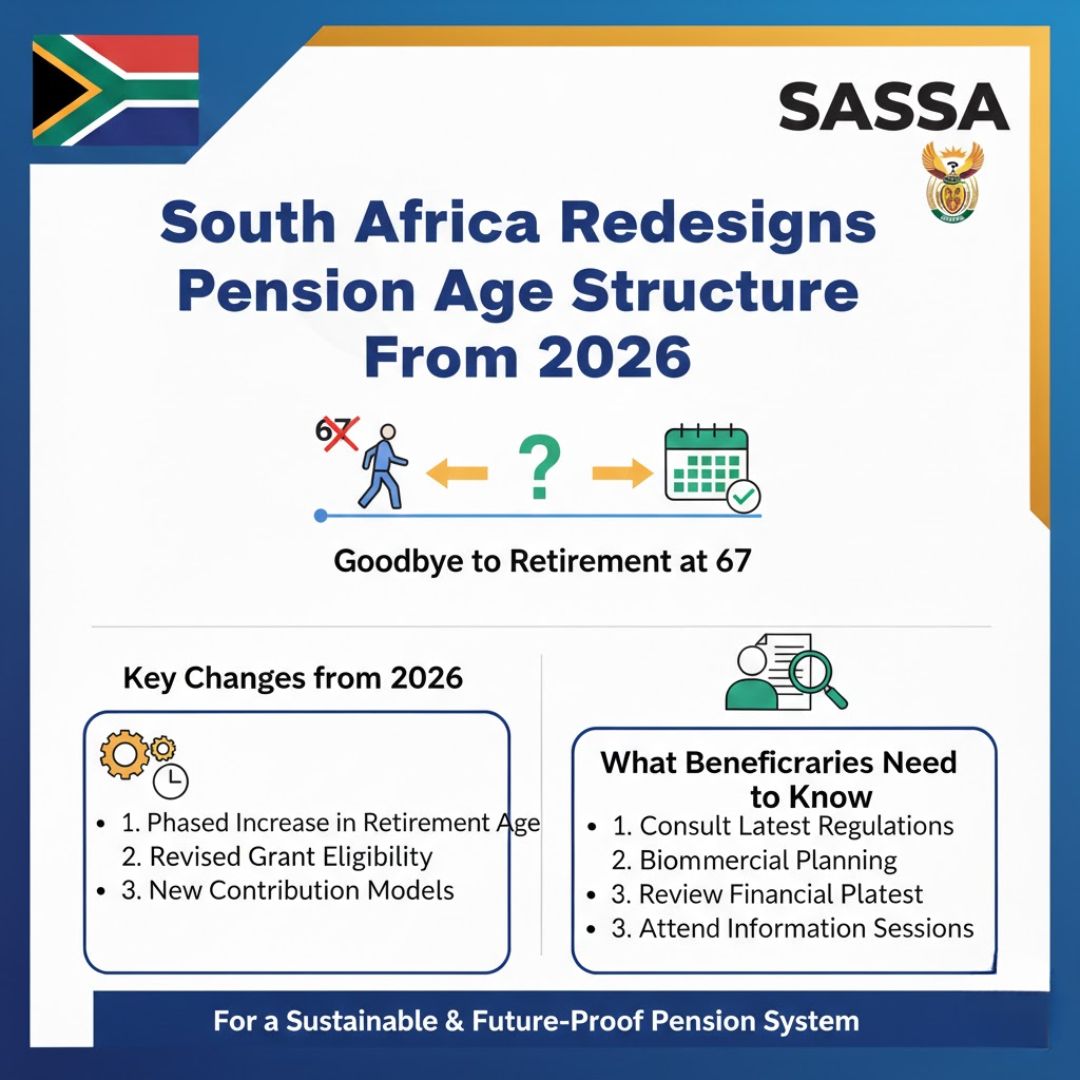
What the Changes to the Age of Retirement Mean for the Future
Saying goodbye to retirement at 67 doesn’t mean that older South Africans won’t get help anymore. Instead, it shows a planned response to what is going on with the economy and the people. A restructured system could make the workforce more adaptable, help with planning for economic resilience, and make sure that the pension system stays useful for a long time. The government wants to keep retirement income stable while making changes. To do this, they will carefully phase in the changes and put fairness first. In a world that is changing quickly, the next few years will show how well these changes balance caring for people with protecting the environment.The standard age for retirement is now 67. Eligibility Criteria for a Flexible or Phased Range Qualification based on age